Blog

  • Performance Downpipes for Mercedes C63 W205, A45S and AMG GT

    Performance Downpipes for Mercedes C63 W205, A45S and AMG GT

    Mercedes-AMG vehicles are built with performance at their core, but enthusiasts often look for additional ways to enhance exhaust flow, sound, and driving character. Downpipes are a popular modification for turbocharged AMG models because they connect the turbocharger area with the rest of the exhaust system. The right upgrade can complement other modifications while giving the vehicle a more aggressive personality.

    Why Downpipes Are Important

    The downpipe plays an important role in moving exhaust gases away from the turbocharger. Factory components are engineered to balance performance, emissions, noise, comfort, and durability. Performance alternatives may focus more heavily on reducing restriction and improving exhaust flow.

    The results of a downpipe upgrade depend on the engine, ECU calibration, exhaust system, and supporting modifications. For this reason, choosing a component designed specifically for the vehicle is generally more practical than installing a universal exhaust part.

    Mercedes C63 W205 Downpipe Options

    The Mercedes-AMG C63 W205 is widely appreciated for its distinctive performance and engaging driving character. For owners considering an exhaust upgrade, mercedes c63 w205 catted and catless downpipes  offer two different approaches to modifying the exhaust system.

    Catted downpipes retain catalytic converters and can provide a compromise between improved exhaust flow and emissions control. Catless versions remove the catalytic converters and typically focus on maximum exhaust flow, but they can increase emissions and exhaust odor while potentially causing inspection or legal issues depending on local regulations.

    Before selecting either configuration, owners should consider how the vehicle is used. A road-driven AMG may benefit from retaining emissions equipment, while competition or off-road applications may have different requirements where permitted.

    Mercedes A45S Decat Downpipe

    The compact Mercedes-AMG A45S offers impressive performance from its turbocharged four-cylinder engine. Because of its high-performance character, the exhaust system is an area many enthusiasts consider when building a more responsive and aggressive vehicle.

    A mercedes a45s decat downpipe  is designed to reduce restrictions created by the factory catalytic converter. This type of modification can significantly alter the exhaust note and may complement other performance upgrades. However, removing emissions equipment can cause warning lights, affect emissions compliance, and make the vehicle unsuitable for public-road use in some jurisdictions.

    Owners should check local requirements and ensure that any ECU calibration is appropriate for the modified exhaust configuration.

    Mercedes-AMG GT GTR and GTS Downpipes

    The AMG GT family represents another important part of Mercedes-Benz performance history. Models such as the GT R and GT S combine powerful turbocharged engines with sophisticated chassis technology, making them popular choices for enthusiasts who want a serious performance platform.

    mercedes amg gt gtr gts downpipes  can be considered when developing a more performance-focused exhaust setup. A properly engineered component should account for turbocharger positioning, exhaust routing, sensor locations, and available space. The result can be a more pronounced exhaust character while potentially improving exhaust gas flow.

    Because GT variants can have differences in engine configuration and exhaust systems, buyers should always verify compatibility before ordering.

    Catted vs. Catless: Making the Right Choice

    Choosing between catted and catless downpipes depends on priorities. Catted systems are generally better suited to owners who want to retain some emissions control, while catless designs focus more heavily on unrestricted exhaust flow. The latter can create stronger odors and emissions and may not comply with road-use regulations.

    Performance gains also vary based on software, intake components, exhaust design, and engine condition. A professional tuner can help determine whether additional calibration is appropriate.

    What to Look for in Quality Downpipes

    Material quality, pipe diameter, flange accuracy, welding, heat resistance, and oxygen sensor provisions are all important factors. Stainless steel is commonly chosen because it can withstand high exhaust temperatures and repeated thermal cycling.

    Professional installation can help reduce the risk of leaks, poor alignment, or sensor problems. Always confirm the exact model, year, engine, and drivetrain before purchasing.

    Final Thoughts

    Downpipe upgrades can be an effective way to personalize the performance character of a Mercedes-AMG. Whether considering a C63 W205, A45S, or AMG GT variant, selecting a vehicle-specific component is essential. By balancing exhaust flow, sound, emissions requirements, fitment, and intended use, enthusiasts can create a reliable setup that complements their AMG’s performance without overlooking important practical considerations.

  • Moving Within Bangalore: Traffic, Tech Parks and the Tale of One Missing Screw

    Moving Within Bangalore: Traffic, Tech Parks and the Tale of One Missing Screw

    A colleague of mine moved from Indiranagar to Whitefield a while back. On paper, about 15 kilometres. In reality? Three hours on the road, one very patient truck driver, and a bed frame that arrived without a single screw. Somewhere between Marathahalli and the ITPL main road, the little bag of bolts had vanished. He spent his first night in the new flat sleeping on a mattress on the floor, laughing in that tired way people do when there’s nothing left to do but laugh.

    I’ve thought about that story every time someone tells me they’re planning a move in this city. Because Bangalore, bless it, makes everything a little more complicated than it needs to be.

    Why this city is its own kind of challenge

    Anyone who’s driven here knows. The Silk Board junction, the Outer Ring Road crawl, the sudden downpour that turns a flyover into a river. A relocation that should take a morning can swallow a whole day, and sometimes, if the traffic gods are feeling cruel, a bit more.

    Timing matters a lot. Early starts, around 6 or 7 a.m., help you beat the worst of it. Weekdays tend to be easier than weekends, though that’s when most people move because they can take time off. Try mid-month if you can. Month-end rush, when leases flip over, means busier crews and steeper prices.

    Start by getting rid of stuff

    Honestly, this is the part nobody wants to hear. But every extra box adds to the weight and volume, and that’s how movers calculate the bill. Walk through the house with a slightly hard heart. Old cables, mystery chargers, clothes from five years back, the broken chair you’ll fix “one day.”

    Bangalore has a lively second-hand market, so selling furniture online is easy enough. Donate the rest. You’ll pay less, pack less, and arrive at the new place feeling oddly lighter.

    Finding people you can actually trust

    Here’s where it gets tricky. Type anything into a search bar and you’ll see a wall of options, all promising careful handling and honest rates. Everyone claims to be the best. Few explain why.

    When you start looking at Movers and Packers Bangalore listings, try thinking like you’re hiring someone to look after something precious, because you are. Ask friends and colleagues first, since word of mouth still beats most advertising. Check recent reviews, not just the glowing ones at the top. Then pick up the phone and see how they speak to you.

    Do they ask about your floor, whether there’s a lift, how many rooms, any heavy items like a washing machine or a piano? That’s good. If they throw out a firm number in under a minute without asking anything, be careful. A real quote needs real details.

    Reading the fine print

    Get everything in writing. A decent estimate lists packing material, labour, loading, transport, unloading, unpacking if you want it, and insurance. Extra charges, like carrying items up several floors with no lift, should be clear from the start. The most common complaint I hear is that the final bill doesn’t match the quote, and it almost always traces back to a fuzzy first estimate.

    If you can, ask for a site visit or at least a video walkthrough. It helps them size up your belongings properly. Also check that they provide a proper GST invoice and a goods-transit receipt, and ask how damage claims are handled. Their answer will tell you more than any brochure.

    And keep any advance payment modest. A booking amount is normal. Handing over most of the money upfront to someone you’ve never met is asking for trouble.

    Pack with the weather in mind

    Bangalore’s weather is famously pleasant, which tricks people into forgetting about rain. Between June and October, sudden showers can soak cardboard in minutes. Ask your movers about plastic wrapping, waterproof covers and a fully covered truck. Mattresses, books and electronics hate getting wet more than they hate being dropped.

    Label every box by room and add a line about what’s inside. “Kitchen: glasses, fragile” is far more useful than “misc.” Mark delicate boxes on two sides. Take photos of the TV, router and set-top box wiring before unplugging, and snap a quick picture of any valuable furniture before it’s wrapped.

    And, learning from my colleague’s missing screws, bag up all hardware in a labelled pouch and tape it to the furniture it belongs to. Seriously, it’ll save your sanity.

    One bag that never leaves your side

    Chargers, medicines, a change of clothes, toothbrush, a bedsheet, important documents, a little cash, snacks, maybe a flask of filter coffee if you’re anything like me. The first night in a new place shouldn’t involve ripping open twenty boxes in the dark looking for a towel.

    Apartments, gates and other tiny dramas

    Many apartment communities in Bangalore have rules about moving hours, lift usage and refundable deposits. Some require a prior intimation letter, some restrict truck sizes, a few don’t allow moves on certain days. Talk to the association at both ends well ahead. A loaded truck stuck at the gate while a committee member “checks something” is a stress you can avoid with a single call.

    Older areas like Basavanagudi, Malleshwaram or parts of Jayanagar have narrow lanes where a big truck simply won’t fit. Tell the company upfront so they plan for a smaller vehicle or a short shuttle.

    When the day finally comes

    Be there. Even if you’ve paid for full service, stay on site or send someone you trust. Do a final walk through every room, balcony and storage space. Keep cash, jewellery and documents with you, not on the truck.

    When the stuff arrives, tick it off against your list and note any damage immediately, in writing, before the crew leaves. A cold drink and a small tip for the workers go a long way, too. They’ve carried your whole life up and down stairs all day.

    If you’ve spent time comparing several Packers and Movers Bangalore options and picked one that felt honest, most of this goes smoothly. The point isn’t perfection. It’s having people around you who know what they’re doing when something inevitably goes sideways.

    After the last box

    My colleague did eventually find those screws, by the way. They were in a jacket pocket. He told me this with the weary pride of a man who’d survived something. By the next weekend the flat had curtains, a coffee maker was humming in the kitchen, and the place felt like his.

    That’s the nice part, I think. Moving is messy and exhausting and a little ridiculous. But then one evening, with rain tapping the window and a hot cup of something in your hands, the new place quietly becomes home. Plan a bit, ask the awkward questions, and give yourself some grace.

  • How Backlinks Help Small Businesses Build Online Visibility

    For many small businesses, a good website is only the first step toward gaining customers online. A site may have clear services, useful content, and fast loading pages, but it can still be difficult for people to find it through search engines. Backlinks are one important part of improving that visibility. A backlink is simply a link from another website to your own. When it comes from a relevant and trustworthy source, it can help search engines understand that your business and content are worth showing to users.

    Backlinks should not be treated as a shortcut to instant rankings. They work best as part of a wider digital marketing plan that includes quality content, a technically sound website, good customer service, and accurate business information. For business owners, the goal is not to collect as many links as possible. The goal is to earn or place useful links that make sense for real readers.

    Why Backlinks Matter for Business Websites

    Search engines use many signals to decide which pages may be helpful for a search query. Links from other sites are one of those signals. When an established industry blog, local publication, supplier, or professional organisation links to a page on your site, it can indicate that the page has value.

    There is also a direct benefit beyond search rankings. A link on a relevant website can send interested visitors to your business. For example, a local caterer may receive enquiries after being listed in a wedding venue guide. A software company may gain trial users after contributing an expert article to a technology publication. In these cases, the link brings both visibility and potential customers.

    However, relevance is important. A link from a website that serves a similar audience is generally more useful than a random link from an unrelated page. A plumbing business does not need links from gaming blogs, and an accounting firm does not benefit much from being listed on low-quality websites with no connection to finance or business services.

    Focus on Quality Instead of Quantity

    It can be tempting to focus only on numbers, but a large number of weak links is not a strong long-term strategy. Search engines have become better at identifying unnatural link patterns, spam pages, and websites built only to sell links. Links from these sources may have little value and can create unnecessary risk.

    A better approach is to consider the quality of the website, the relevance of the topic, and the context around the link. A single mention in a respected local news article or industry resource can be more valuable than dozens of irrelevant directory listings.

    Before pursuing a backlink opportunity, ask a few practical questions:

    • Does this website have a real audience?
    • Is the site related to my industry, location, or customer interests?
    • Would a visitor reasonably expect to find my business mentioned there?
    • Will the link point to a useful and relevant page?
    • Does the page appear well maintained and professionally written?

    If the answer to these questions is mostly yes, the opportunity may be worth considering. Businesses that need a more structured way to find suitable placements can explore services that help them get backlinks, while still choosing publications that fit their market and standards.

    Create Pages That Other Websites Want to Reference

    Link building is easier when a business has something useful to link to. A basic homepage can receive links, but it is often more effective to develop pages that solve a clear problem for readers. These pages give journalists, bloggers, customers, and industry partners a reason to mention your website.

    Useful content ideas include:

    • Detailed guides that answer common customer questions
    • Local information pages for the areas your business serves
    • Original surveys, market findings, or simple industry research
    • Checklists, templates, calculators, and practical tools
    • Case studies showing how you solved a client problem
    • Clear explanations of regulations, processes, or product choices

    For example, a commercial cleaning company could publish a workplace cleaning checklist for office managers. A web design agency could create a guide to preparing website content before a redesign. These resources are more likely to be shared or referenced than a page that only lists services.

    Use Local Relationships and Business Connections

    Small businesses often overlook the link opportunities already available in their local area and professional network. Existing relationships can lead to relevant, natural mentions without relying on broad outreach campaigns.

    Start by looking at suppliers, trade associations, chambers of commerce, community groups, local events, and business partners. If your company supports a charity event, provides materials for a project, or works with another local firm, there may be a reasonable opportunity for a link on the relevant website. The key is that the listing or mention should reflect a genuine relationship.

    Local citations are also useful. These are listings of your business name, address, phone number, and website on reputable local directories or industry-specific platforms. Consistent business details help customers find the right information and support local search visibility. Always check that your details are accurate before submitting a listing.

    Guest Content Can Build Authority When Done Carefully

    Writing for another website can be a sensible way to reach a new audience and earn a relevant link. The strongest guest articles are informative rather than promotional. They address a useful subject for the host website’s readers and include the business link only where it adds context.

    For example, a cybersecurity consultant could write about simple ways small companies can protect employee accounts. A construction firm could explain how to plan a renovation budget. The article should provide genuine knowledge, not repeat sales messages. Editors are more likely to accept content that is specific, accurate, and helpful.

    It is also important to avoid publishing the same article across multiple websites. Unique content is better for readers and gives each placement a clearer purpose.

    Common Backlink Mistakes to Avoid

    A careful strategy protects your business reputation as well as its search performance. Avoid buying large bundles of unknown links, using automated comment links, or adding your website to every directory you can find. These methods may look quick, but they rarely create meaningful traffic or trust.

    Another mistake is sending all links to the homepage. Where appropriate, link to the page that best matches the topic. A guide about payroll should link to a payroll service page or a useful payroll article, not automatically to a general homepage.

    Finally, do not judge success only by rankings. Track referral visitors, enquiries, newsletter sign-ups, and sales from the websites that mention you. A relevant link that brings a small number of highly interested visitors can be extremely valuable.

    Conclusion

    Backlinks remain an important part of online growth, but they should be approached with care. Businesses benefit most from relevant links earned through useful content, credible relationships, local involvement, and thoughtful industry outreach. By concentrating on quality and reader value, a small business can build a stronger online presence that supports both search visibility and real customer growth over time.

  • What a Free Water Test Can Tell You About Your Home’s Water

    What a Free Water Test Can Tell You About Your Home’s Water

    Most people don’t think much about their water until something seems off. Maybe the showerhead starts collecting white buildup. Perhaps the dishes come out with spots, the water tastes a little strange, or the soap just doesn’t seem to work the way it used to. These little signs can be easy to dismiss, but they may be telling you something about the quality and characteristics of your household water.

    The good news is that you don’t have to guess. A water test can provide useful information about what’s happening in your water and help you make smarter decisions about filtration or softening.

    Why Testing Your Water Is Worth It

    Clear water isn’t necessarily problem-free water. Many minerals and other substances can’t be seen, smelled, or noticed immediately. Hardness, for example, can quietly create scale inside plumbing and appliances for months or even years before the effects become obvious.

    That’s why it can be helpful to schedule a free water test before spending money on a treatment system. Instead of choosing equipment based on a generic recommendation, you’ll have actual information to work with.

    It’s a simple step, but it can prevent a lot of guesswork later.

    What Happens During a Water Test?

    A typical household water test looks at different characteristics depending on the provider and testing method. Hardness is often an important factor, especially in homes experiencing mineral deposits or scale.

    Other tests may look at factors related to water quality, taste, odor, or specific contaminants. The exact testing available can vary, so homeowners should ask what the test measures and how the results will be explained.

    A good test isn’t just about handing you a sheet of numbers. The useful part is understanding what those numbers mean for your home.

    Signs Your Water May Need Attention

    Sometimes your house gives you clues.

    White or chalky residue around faucets can point toward hard water. Dry-feeling skin after a shower, difficulty getting soap to lather, and spots on dishes are also common complaints associated with water hardness.

    Then there are less obvious signs. Maybe your water has an unusual smell or taste that you’ve simply gotten used to. Maybe an appliance seems to develop scale faster than expected.

    None of these signs automatically proves there’s a serious water-quality issue. Still, they’re good reasons to investigate rather than ignore the problem.

    The Convenience of In-Home Testing

    For busy homeowners, going somewhere to have water tested isn’t always convenient. This is one reason free in-home water testing can be appealing.

    Having the water evaluated at home allows the process to happen in the environment where the water is actually being used. A professional may also be able to look at the home’s plumbing setup and discuss concerns that aren’t obvious from a laboratory result alone.

    And there’s something reassuring about being able to ask questions right there. If you’ve ever stared at a technical report wondering what half the terms mean, you know what I mean.

    Understanding Hard Water

    Hard water is one of the most common reasons homeowners investigate treatment options. It contains elevated levels of minerals, mainly calcium and magnesium.

    While hardness isn’t usually something you can identify just by looking at a glass of water, its effects can become obvious over time. Mineral scale may build up on fixtures, shower doors, pipes, and water-using appliances.

    A water softener can help reduce hardness by exchanging certain minerals in the water. But whether you need one depends on your actual water conditions and household preferences.

    Testing first gives you a much clearer starting point.

    Don’t Choose a System Based on Guesswork

    It can be tempting to search online, find a popular water treatment system, and assume it will solve every problem. Unfortunately, water treatment doesn’t work quite that simply.

    Different systems are designed for different purposes. Filtration may be useful for certain sediment, taste, odor, or contaminant concerns, while softening is aimed primarily at hardness.

    The right solution depends on the problem.

    A water test can help narrow things down and make the conversation with a water treatment professional far more productive.

    What Should You Ask About the Results?

    When your test is complete, don’t be afraid to ask questions. You should understand what was tested, what the results indicate, and whether treatment is actually recommended.

    Ask about hardness levels, filtration needs, maintenance requirements, and the expected lifespan of any equipment being suggested. If a company recommends a system, ask why that particular system fits your water.

    You don’t need to become a water-quality expert overnight. You just need enough information to make a decision you feel comfortable with.

    Free Testing Doesn’t Mean You Should Rush

    The word “free” naturally gets people’s attention, but that doesn’t mean you should feel pressured into buying something afterward.

    If you get your water tested free, treat the appointment as an opportunity to learn. Take notes. Ask questions. Compare recommendations if necessary. A reputable provider should be willing to explain the results clearly instead of making everything sound complicated.

    The purpose of testing should be understanding your water first and discussing solutions second.

    Making Better Decisions for Your Home

    Water treatment is a long-term household decision. The equipment you choose can affect your daily routine, appliances, plumbing, and maintenance costs for years.

    That’s why starting with a water test makes sense. You get a clearer picture of what you’re dealing with before making a purchase.

    Maybe the results show that your water is perfectly fine and doesn’t require major treatment. That’s useful information too. Or perhaps the test reveals hardness or another concern that deserves attention. Either way, you’ll be making a decision based on facts rather than assumptions.

    A Small Step Toward Better Water

    You don’t have to wait until your faucets are covered in scale or your appliances are struggling before paying attention to water quality. A simple water test can be the first step toward understanding what’s coming through your taps every day.

    For homeowners considering filtration or softening, testing can make the process less confusing and much more personal. Instead of asking, “Which system should I buy?” you can start with the better question: “What does my water actually need?”

    That small change in approach can make a big difference. Better water decisions usually begin with better information.

  • The Places That Quietly Shape How We Experience a City

    The Places That Quietly Shape How We Experience a City

    A city is more than roads, buildings, traffic lights, and crowded markets. Anyone who has lived in the same place for years knows this. What really makes a city feel livable is often the collection of places we depend on without thinking much about them.

    It might be the café where someone remembers your usual order, the hotel that becomes a temporary home during a family trip, or the medical facility you hope you won’t need but are relieved to have nearby. These places become part of everyday life in ways that aren’t always obvious.

    And interestingly, our expectations of them have changed quite a bit.

    We Choose Places Differently Now

    Not too long ago, finding a local business usually meant asking someone you trusted. A neighbor knew a good mechanic. A colleague recommended a doctor. Your cousin had a favorite place for dinner.

    Word of mouth still matters, probably more than businesses sometimes realize, but the search often begins online now.

    People check maps, photographs, opening hours, customer comments, menus, prices, parking information and dozens of other little details before leaving home. Sometimes we spend twenty minutes researching a place we’ll only visit for an hour.

    That sounds excessive, but there’s a reason for it. People don’t just want options anymore. They want confidence that they’ve chosen well.

    Food Is About More Than What’s on the Plate

    Think about how people choose restaurants today.

    Of course, the food matters. Nobody goes back to a place repeatedly because the chairs were comfortable while dinner was terrible. Still, food is only one piece of the experience.

    Was the place clean? Did the staff make people feel welcome? Was it unbearably noisy? Could a family comfortably bring children? Did the meal actually look anything like the photographs online?

    Small details stick with us.

    A modest neighborhood eatery with warm service and consistently good food can build a more loyal following than a fashionable venue with expensive interiors. People remember how a place made them feel. That’s hard to measure with stars and ratings, but it’s often what brings them back.

    Local food businesses that understand this tend to create something stronger than customer traffic. They create familiarity.

    A Good Stay Should Feel Effortless

    Travel creates a slightly different set of expectations.

    When people look at hotels, they’re usually buying more than a room and a bed. They’re buying convenience, rest and, in an unfamiliar city, a little reassurance.

    Sometimes the things that matter most aren’t glamorous at all.

    A smooth check-in after a long journey. Clean bedding. Reliable Wi-Fi when there’s an important morning call. Staff who can explain how to reach a nearby railway station without making it sound complicated.

    These are ordinary things, yet ordinary things become surprisingly important when you’re tired and away from home.

    That’s also why genuine guest reviews have become so influential. Promotional photographs can show a beautiful lobby, but previous visitors often tell you what staying there actually feels like.

    Healthcare Changes the Meaning of “Nearby”

    There are some services we browse casually and others where location, reliability and trust suddenly become serious matters.

    Access to hospitals belongs firmly in the second category.

    Most of us don’t spend a normal Tuesday thinking about emergency departments, diagnostic facilities or specialist availability. But when a family member becomes ill or an accident happens, distance can suddenly feel very different.

    A facility ten minutes away feels close. One an hour away doesn’t.

    Good healthcare infrastructure also influences how comfortable people feel living in an area, particularly families with young children, older adults or relatives who need regular medical attention. It’s one of those factors that may not make a neighborhood look exciting in a photograph, but it can make everyday life considerably easier.

    Local Places Create the Character of a Neighborhood

    What’s interesting is how these different places connect.

    A busy medical district may support cafés, pharmacies and accommodation nearby. A popular tourist neighborhood can encourage new food businesses and better transportation. A growing residential area may eventually attract clinics, supermarkets, gyms and other useful services.

    Cities evolve through these small relationships.

    You can sometimes watch it happen in real time. A quiet road gets a new coffee shop. Then another business opens beside it. Foot traffic increases. A few years later, the whole stretch feels completely different.

    Not every change is positive, obviously. Rapid development can increase rents, create congestion and push out older local businesses. Growth works best when it improves convenience without stripping an area of the character that made people enjoy it in the first place.

    Online Information Has Become Part of the Experience

    There’s another side to all this that’s easy to overlook: digital information is now almost part of the physical place itself.

    Wrong opening hours can ruin a visit before it begins. An outdated phone number creates frustration. Missing accessibility information can make planning unnecessarily difficult. Poor photographs may cause people to ignore an otherwise excellent business.

    For local organizations, keeping online information accurate isn’t merely a marketing exercise anymore. It’s customer service.

    People increasingly move between the digital and physical world without treating them as separate experiences. They discover something online, visit it offline, review it online again, and that review influences the next person’s decision.

    It’s a continuous little loop.

    What Makes a Place Worth Returning To?

    Technology has made finding local services easier, but it hasn’t changed the basic things people value.

    We still appreciate cleanliness. Reliability matters. Kindness matters. Fair pricing matters. So does the feeling that the people running a place actually care whether our experience is good.

    A business can have polished branding, hundreds of reviews and a beautifully designed website. Those things certainly help people discover it. But eventually someone walks through the door.

    That’s where reputation becomes real.

    The places that become meaningful parts of a city are rarely memorable because of one clever advertisement or trendy feature. They’re remembered because they consistently solve ordinary human needs — a good meal, a comfortable night’s sleep, dependable care, or simply a place where someone feels welcome.

    And perhaps that’s what makes a city feel like home. Not the skyline or the famous landmarks, but the dependable places woven quietly into everyday life.

  • Creating Beautiful Spaces Related to Personality

    Creating Beautiful Spaces Related to Personality

    A house interior is usually described in terms of colour combinations, pieces of furniture, textures, and décor, but there is more to it. The ideal interior should be visually pleasing and inviting and should represent its occupants. The interior design should reflect stories, personal habits, and details that will help create a sense of belonging.

    All these can be done without going into a massive remodeling project or a huge expenditure. Sometimes, altering the lighting scheme, changing the arrangement of the pieces of furniture, adding textures or objects which hold some significance might completely change the feel of an interior.

    Start With How You Want the Room to Feel

    Before settling on a color scheme or going through catalogues of furniture, take into consideration the kind of atmosphere you would like to generate. Dehradun escorts may prefer a living room that feels tranquil and cozy, while the bedroom should be restful. Or maybe the dining area should be warm and sociable and the study conducive to concentration?

    Just this one simple step will make many decisions about decoration much easier. With the atmosphere that you wish to create in mind, you can choose colours and materials and furniture and lighting to help create it. You will not have to worry whether something is in fashion or not, but simply whether it fits the atmosphere that you are trying to create.

    Let Colour Set the Mood

    The color scheme will alter the entire atmosphere of the room. Soft neutral tones will provide the base; earth tones will bring warmth into the room, but darker greens, blues, or terracotta colors will give some character to the room. It is not necessary to paint all walls in a dramatic color scheme to create a statement. One wall can be enough, or you can add some colorful pictures, cushions, or decorative details to add contrast to your room.

    The most interesting interiors use a color scheme rather than one single color. Think about using one color as the base, another color as the second color, and accents for adding more character to your room.

    Texture Makes A Room Feel Alive

    Even a room furnished with elegant items can appear lifeless. What it lacks is texture. Consider how Jammu escorts might appreciate the interaction between polished wood, fabric upholstery, wicker basketry, cushioned textiles, rugs, and drapery. Every single item responds to light differently and contributes to the overall texture of the space.

    Texture becomes especially important in neutral color schemes, where it can add variation without the use of vibrant hues. Materials such as linen, timber, wool, ceramic, glass, rattan, and natural stone could provide subtle texture to a room. Rather than merely thinking about the color palette of a room, you should also be thinking about its texture.

    Lighting Can Change Everything

    One of the most important aspects of home decoration is lighting, since one and the same room may look entirely different based on how it is lit. While one central lighting source in the ceiling may suffice when it comes to practicality, it might spoil the evening mood. With multiple light sources, it is possible to create more flexibility. Ceiling lights, floor lamps, table lamps, and even decorative lights will allow you to use different parts of your room for different purposes.

    A place for reading should have bright light, whereas the living room can be lit up by softer lamps installed near sofas. Rajkot escorts may also appreciate how decorative lighting can become a decorating element itself. Consider lighting to be a part of the interior design, not just an add-on.

    Let’s Sum Up

    Great home decorating is not all about copying the latest interior design trends and having fancy things in your house. Instead, it’s all about making your environment fit into your lifestyle while allowing your personality to shine through.

    Use the colours that will help set the tone for your environment; use textures, lighting, and furniture that will complement your way of living. Add artwork and items that will make your interior more personal, let the outdoors inside, and create storage space that will not take away the charm of your surroundings. The most important thing of all is to give yourself the freedom to experiment. You don’t have to decorate your entire house in one day, and there’s no need to conform to someone else’s idea of perfection.

  • Why an Under-Sink Reverse Osmosis System Can Make a Real Difference

    Why an Under-Sink Reverse Osmosis System Can Make a Real Difference

    There’s something oddly reassuring about turning on the kitchen tap and knowing the water in your glass is clean, fresh, and suitable for drinking. Yet for many households, that confidence doesn’t come automatically. Tap water can contain minerals, chlorine, sediment, unpleasant tastes, or other contaminants that affect its quality.

    That’s where modern filtration technology can help. An under sink reverse osmosis system, for example, is designed to provide treated drinking water directly at the kitchen sink without taking over valuable counter space. It’s a practical option for people who want better-tasting water without constantly buying bottled water.

    But choosing a filtration system shouldn’t be about buying the most complicated equipment available. It’s about understanding your water, knowing what you want to remove, and choosing a system that actually fits your home.

    What Makes Reverse Osmosis Different?

    Reverse osmosis, often called RO, uses a semi-permeable membrane to filter water. Under pressure, water passes through the membrane while many dissolved substances and unwanted impurities are held back and flushed away.

    The process is more thorough than basic carbon filtration. Carbon filters are excellent for improving taste and reducing certain chemicals, but RO can target a broader range of dissolved contaminants.

    That doesn’t mean reverse osmosis is automatically the right answer for every household. Water quality varies considerably from one location to another. A home supplied by a private well may have completely different concerns from an apartment connected to a municipal water supply.

    Testing the water first is usually the smarter move.

    Better-Tasting Water Starts With Knowing Your Water

    Sometimes the first sign of a water-quality problem isn’t a laboratory report. It’s your morning coffee.

    Maybe the water tastes slightly metallic. Perhaps there’s a noticeable chlorine smell, or a glass left overnight develops an odd taste. Hard-water minerals can also leave spots on dishes and create scale around faucets and appliances.

    A good filtration strategy begins by identifying what’s actually present.

    Depending on the source and local conditions, water may contain:

    • Sediment and suspended particles
    • Chlorine and certain chemical compounds
    • Dissolved minerals
    • Heavy metals such as lead
    • Certain microorganisms
    • Unwanted tastes and odors
    • Other dissolved contaminants

    No single filter removes everything. That’s why a properly selected system often combines several stages of filtration rather than relying on one filter alone.

    Understanding the RO Filtration Process

    A typical reverse osmosis system has multiple stages, and each one has a specific job.

    The first stage commonly involves sediment filtration. This catches particles such as sand, dirt, and rust that could otherwise interfere with later stages.

    Next, activated carbon filtration may reduce chlorine, odors, and certain organic compounds. Protecting the RO membrane from chlorine is especially important because chlorine can damage some membrane materials.

    Then comes the reverse osmosis membrane itself. This is the heart of the system. It allows water molecules to pass through while rejecting many dissolved contaminants.

    Some systems add a final polishing filter after the membrane. This can improve taste just before the water reaches the dedicated faucet.

    The result is purified water that can be used for drinking, cooking, making ice, filling bottles, and even preparing baby formula where appropriate and according to professional guidance.

    Is Bottled Water Really More Convenient?

    Bottled water seems simple. Grab a bottle, drink it, recycle it. Done.

    Except, of course, it’s rarely quite that simple.

    Bottles need to be purchased, transported, stored, and eventually disposed of. A family that drinks several bottles a day can quickly accumulate a surprising amount of plastic and expense.

    A point-of-use filtration system offers a different approach. Once installed and maintained properly, it provides treated water right where you need it.

    There’s also the convenience factor. You don’t have to remember to put bottles in the refrigerator or make another trip to the store because the water supply at home ran out.

    For households that already drink a lot of bottled water, an RO system can feel less like a luxury and more like a practical everyday appliance.

    Why an Under-Sink System Works Well in Kitchens

    Counter space is precious. Between coffee machines, toasters, air fryers, and the random collection of things that somehow ends up beside the sink, adding another appliance isn’t always appealing.

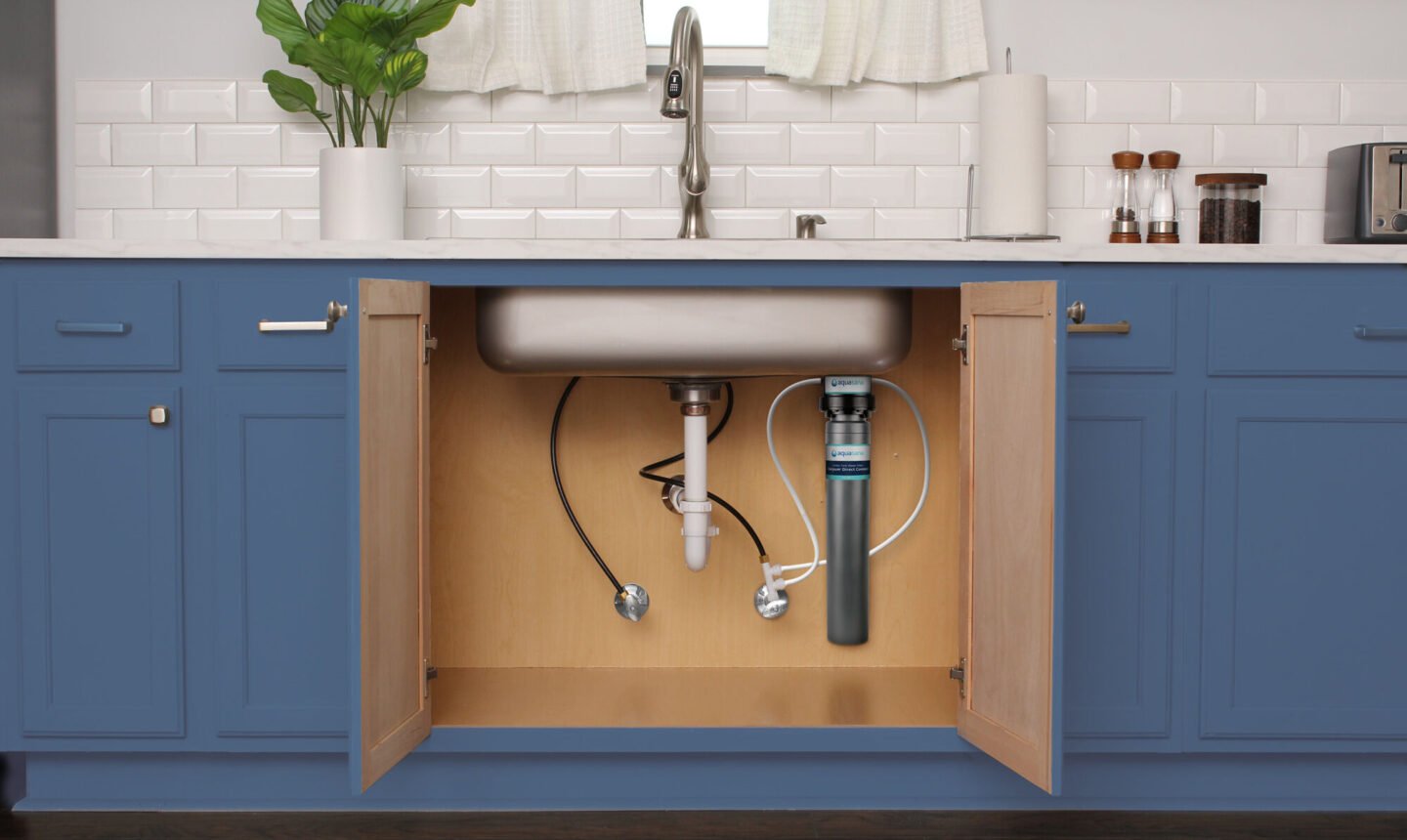
    An under-sink setup keeps the filtration equipment tucked away inside the cabinet. Only the drinking-water faucet needs to remain visible above the counter.

    This arrangement is particularly useful for homeowners who want filtered drinking water without installing a whole-house system.

    There are trade-offs, naturally. An under-sink RO system generally treats water at a specific point of use rather than supplying every faucet in the home. It also requires filter replacements and periodic maintenance.

    Still, for drinking and cooking water, it can be a remarkably convenient solution.

    Maintenance Matters More Than People Think

    Buying a filtration system is only half the job.

    Filters don’t last forever. As they collect contaminants, their effectiveness can decrease. A neglected system may also develop unpleasant tastes or odors, which rather defeats the purpose of having filtration in the first place.

    Replacement schedules depend on the system, water quality, usage, and manufacturer recommendations. Some households may need replacements more frequently than others.

    It’s worth keeping a simple maintenance reminder on your phone or calendar. Five minutes of planning can prevent the classic “I think that filter was changed sometime last year?” situation.

    Regular inspection is also useful. Check connections for leaks, look at tubing and fittings, and pay attention to changes in water taste or flow.

    Choosing the Right System for Your Home

    There’s no universal filtration system that works perfectly for everyone.

    Start with a water-quality test. Then consider what matters most to your household. If taste and chlorine are the primary concerns, a carbon-based filter might be enough. If dissolved contaminants are a concern, reverse osmosis may be worth considering.

    Storage capacity, filtration stages, wastewater production, installation requirements, and replacement-filter costs are also worth comparing.

    Look beyond the initial price. A cheaper system can become expensive if replacement cartridges are difficult to find or maintenance costs are high.

    Most importantly, choose equipment designed for your specific water conditions rather than simply buying the system with the longest list of features.

    The Bigger Picture of Water Treatment

    Good filtration isn’t simply about having better-tasting water. It’s part of a broader approach to household water quality.

    Professional water treatment can involve filtration, softening, disinfection, testing, and other technologies depending on the source and contaminants involved. The right combination depends heavily on whether your water comes from a municipal supply, private well, or another source.

    That’s why testing and professional advice can be valuable, especially when there are persistent odors, unusual tastes, staining, or concerns about specific contaminants.

    At the end of the day, clean drinking water shouldn’t feel complicated. A thoughtfully chosen filtration system can make everyday routines easier, reduce dependence on bottled water, and give your family greater confidence in what comes out of the kitchen tap.

    And sometimes, that little bit of confidence is exactly what makes a house feel more like home.

  • Breaking Down the Expenses of a Standard 30-Second TV Spot

    Breaking Down the Expenses of a Standard 30-Second TV Spot

    A 30-second television commercial remains one of the most visible yet least transparent investments in modern marketing. What appears on screen as a polished flash of storytelling conceals a layered structure of costs that can stretch from a few thousand dollars in a small market to many millions for national or event-driven placement. Understanding those layers requires separating the creation of the spot from the purchase of the airtime that delivers it, then examining the variables that push each component higher or lower. The result is not a single price but a spectrum shaped by geography, programming, production ambition, and negotiation leverage.

    The Dual Layers of Investment: Production Versus Placement

    Every television campaign rests on two distinct budgets that rarely move in tandem. Production covers the work required to turn a concept into a finished file ready for broadcast. Placement covers the fee paid to networks or stations for the right to insert that file into a specific program or daypart. Industry patterns consistently show that media buying consumes the larger share of total spend, often 65 to 80 percent for sustained campaigns, while production accounts for the remainder. This imbalance explains why a modestly produced local commercial can still become expensive once it begins to air, and why a high-production national spot can look surprisingly restrained once the media schedule is examined.

    Production itself unfolds across three phases. Pre-production absorbs concept development, scripting, storyboarding, casting, location scouting, and permits. Mid-range work in this phase commonly falls between several thousand and twenty thousand dollars. Principal photography then introduces the largest single-day outlays: crew day rates, equipment packages, talent fees, and set or location costs. A lean crew of four to eight people can keep a one-day shoot in the low five figures; a more elaborate setup with union talent and multiple locations quickly multiplies that figure. Post-production finishes the process through editing, color grading, sound design, music licensing, and any visual effects. These finishing costs often equal or exceed the shoot itself when high production values are required.

    How Market Size and Daypart Shape Airtime Pricing

    Airtime pricing is governed primarily by audience size and demand. In the smallest designated market areas, a 30-second unit during daytime or late-night slots can be acquired for a few hundred dollars. Mid-sized markets typically range from several hundred to a few thousand dollars per spot. Top-ten markets, particularly during early fringe or prime time, routinely climb into the five-figure range, with the most competitive programming in New York or Los Angeles reaching tens of thousands for a single airing.

    Daypart exerts an equally strong influence. Early morning and daytime inventory remains the most accessible. Early fringe (late afternoon) and prime time command premiums that can be several times higher. Live sports and special events sit at the extreme end. A regular-season football placement on a major broadcast network can exceed several hundred thousand dollars, while the Super Bowl itself has settled near eight million dollars for a 30-second unit in recent cycles. These headline figures, however, represent only the media rate card; they exclude the production investment and any additional commitments networks may require.

    Cable networks occupy a middle band. National cable averages remain lower than broadcast primetime, yet premium sports or entertainment channels still demand substantial rates. Niche or off-peak cable inventory offers more flexibility for advertisers seeking frequency without the highest absolute cost.

    Unpacking the Production Pipeline Costs

    Within production budgets, certain line items consistently dominate. Talent fees, especially when SAG-AFTRA rates and usage rights apply, can range from modest session payments for local non-union performers to substantial sums once national or residual obligations enter the picture. Music licensing follows a similar pattern: stock libraries keep costs low, while original composition or popular track clearances escalate quickly. Equipment and crew form the core operational expense of any live-action shoot. A basic package of camera, lighting, and sound can be secured for a few thousand dollars per day; cinema-grade packages and specialized departments push daily costs higher.

    Agency or production-company markups introduce another layer. Creative development, project management, and quality control typically add 10 to 20 percent or more, depending on the relationship and scope. Legal clearances, insurance, and contingency reserves further protect against overruns that are common when locations change or weather intervenes. For national broadcast quality, median production costs have been reported in the low-to-mid six figures, though many mid-market brands achieve professional results at substantially lower levels by controlling scope and shooting efficiently.

    National Primetime Realities Versus Local Accessibility

    The contrast between local and national execution is stark. A local service business can often complete a functional 30-second spot for under ten thousand dollars in production and then purchase a multi-week schedule across several stations for a comparable or only modestly higher media outlay. The same production ambition applied to a national primetime campaign, however, multiplies both sides of the ledger. Broadcast network primetime averages have shown 30-second units ranging from tens of thousands into the low hundreds of thousands, depending on the program’s rating performance and the network’s overall inventory pressure.

    This disparity is not merely about reach. National placement carries stricter technical and creative standards, higher talent residual obligations, and greater scrutiny from brand and legal teams. Local stations, by contrast, often accept more flexible creative and may offer remnant inventory at discounted rates when demand softens. Advertisers who treat local television as a testing ground can therefore refine messaging and measure response before committing to the larger national numbers.

    Hidden Variables That Amplify Total Outlays

    Several less visible factors routinely expand the final bill. Frequency requirements mean that a single airing rarely suffices; most campaigns buy packages measured in gross rating points or number of spots per week. Seasonal demand, particularly around holidays or major sports calendars, tightens inventory and lifts rates. Agency commissions, typically structured as a percentage of media spend, add a predictable but material surcharge. Residuals for union talent continue to accrue with each additional market or cycle of use, turning what began as a one-time fee into an ongoing obligation.

    Negotiation skill also matters. Rate-card prices are starting points. Experienced media buyers routinely secure meaningful discounts through multi-station packages, remnant purchases, or long-term commitments. Conversely, last-minute buys or highly specific targeting can eliminate those efficiencies. Production efficiencies work in the opposite direction: shooting multiple versions or additional length cuts during the same principal photography day can reduce the per-spot cost substantially.

    Scaling Decisions That Redefine the Investment

    When advertisers move beyond routine primetime into tentpole events, the economics shift from incremental to transformative. The Super Bowl remains the clearest illustration. Airtime alone near eight million dollars is only the beginning. Production budgets for those spots frequently reach one to several million dollars, celebrity talent can add comparable amounts, and networks often require accompanying media commitments across other programming. The cumulative outlay can therefore approach or exceed twice the headline media figure once all associated costs are tallied.

    Yet most advertisers never operate at that scale. For the majority of brands, the relevant decision is whether a disciplined local or regional schedule, supported by controlled production, delivers measurable reach and response at a cost that digital alternatives cannot match for certain audiences. The analytical takeaway is consistent: the true expense of a 30-second television spot is not a fixed number but the product of deliberate choices about ambition, geography, timing, and negotiation. Those who map each component before committing capital are positioned to extract the greatest value from an enduring medium that continues to command attention even as viewing habits evolve.

  • Understanding Your Home’s Water: Why Better Water Quality Starts with the Right Solution

    Understanding Your Home’s Water: Why Better Water Quality Starts with the Right Solution

    Water is one of those things we rarely think about until something feels off. Maybe the tap water suddenly tastes metallic, the shower leaves your skin feeling dry, or white spots start appearing on dishes no matter how carefully they’re washed. Small signs like these often point to bigger water issues that many homeowners overlook.

    The truth is, every home receives water with a unique mineral profile and different levels of contaminants depending on the local supply or private well. That’s why there’s no universal fix. Understanding what flows through your pipes is the first step toward making smarter decisions that improve everyday life.

    Why Water Quality Isn’t the Same Everywhere

    Two homes located just a few miles apart can have surprisingly different water conditions. Municipal treatment plants do an excellent job of making water drinkable, but that doesn’t always mean it’s ideal for daily use. Minerals, chlorine, sediment, aging pipes, and naturally occurring substances can all influence taste, odor, and performance.

    If your home relies on a private well, the differences can be even more noticeable. Seasonal changes, groundwater conditions, and surrounding soil all affect what’s coming out of the faucet.

    That’s why homeowners shouldn’t rely on assumptions. Testing your water provides a much clearer picture of what you’re actually using every day.

    Every Home Has Different water quality needs

    One of the biggest misconceptions is believing that one filtration system works for everyone. In reality, families have completely different lifestyles and concerns. Some want to reduce chlorine. Others are dealing with hard water, iron stains, sulfur odors, or sediment buildup.

    Your home’s plumbing, appliance usage, family size, and local water source all play a role in determining the best approach. Understanding your water quality needs helps you avoid spending money on equipment that solves the wrong problem—or only fixes part of it.

    A customized solution almost always performs better than a one-size-fits-all product pulled from a store shelf.

    Small Water Problems Often Become Expensive Ones

    Water doesn’t have to look dirty to create problems. Hard water, for example, slowly builds mineral deposits inside pipes, faucets, water heaters, dishwashers, and washing machines. These deposits reduce efficiency over time and force appliances to work harder than necessary.

    Even something as simple as clean mineral-rich water can shorten the lifespan of expensive household equipment. Repairs become more frequent, utility bills creep upward, and eventually replacement becomes unavoidable.

    Addressing water issues early is usually far less expensive than dealing with long-term damage.

    Better Water Changes Everyday Living

    It’s funny how quickly people stop noticing little annoyances once they’re gone.

    Coffee tastes smoother. Ice cubes become clearer. Soap lathers more safe easily. Towels feel softer after washing, and dishes come out cleaner without cloudy residue.

    These aren’t dramatic changes overnight—they’re subtle improvements that quietly make everyday routines more enjoyable. After living with better water for a while, most homeowners wonder why they waited so long.

    The benefits extend beyond convenience too. Cleaner water can make cooking more enjoyable and help preserve the natural flavor of ingredients without unwanted odors interfering.

    Choosing the Right Treatment Matters

    There’s no shortage of water treatment products on the market, and that can make shopping confusing. Some systems focus on improving taste, while others reduce minerals, remove sediment, and great-tasting water or target specific contaminants.

    Instead of buying based solely on advertising claims, it’s worth identifying the actual issue first. Water testing provides valuable information that guides better decisions.

    In many cases, combining different technologies creates the best results. For example, sediment filtration may work alongside carbon filtration or water softening depending on the home’s conditions.

    The goal isn’t buying the biggest system available. It’s selecting equipment that actually addresses the water entering your home.

    Why Professional Installation Makes a Difference

    Installing filtration equipment isn’t just about connecting pipes.

    Proper sizing, pressure considerations, plumbing layout, maintenance access, and future service all influence how well a system performs. Even excellent equipment can underperform if installed incorrectly.

    Experienced professionals also help homeowners understand filter replacement schedules, routine maintenance, and expected performance over time.

    That guidance often prevents small issues from becoming frustrating problems later.

    Creating clean, safe, and great-tasting water for Everyday Life

    Most families simply want confidence when they turn on the tap. They want water they can drink without hesitation, cook with comfortably, and use throughout the home without worrying about unpleasant smells or stubborn mineral buildup.

    That’s exactly what properly selected treatment systems aim to provide—that supports healthier daily habits while improving the overall experience of living in the home.

    The improvement isn’t always flashy, but it’s noticeable in countless little moments throughout the day.

    Why Modern residential systems Offer More Than Ever

    Water treatment technology has come a long way over the past decade. Today’s residential systems are designed to be more efficient, reliable, and easier to maintain than many older models.

    Many require less maintenance, consume fewer resources, and deliver consistent performance for years with routine servicing. Some even include smart monitoring features that alert homeowners when filters need replacing or maintenance is due.

    These innovations make owning a water treatment system simpler than many people expect.

    Looking Beyond Today’s Water

    Installing the right solution isn’t just about solving today’s problems. It’s an investment in the long-term health of your plumbing, appliances, and household comfort.

    As neighborhoods grow and infrastructure ages, water quality can change over time. Having the right treatment system in place provides flexibility and peace of mind for whatever comes next.

    Homeowners often spend thousands upgrading kitchens, bathrooms, flooring, and landscaping, yet the quality of the water running through the entire home receives very little attention. That’s beginning to change—and for good reason.

    When you improve your home’s water, you’re improving something every member of the family uses multiple times every single day. From morning coffee to evening showers, the difference quietly becomes part of everyday life.

    At the end of the day, cleaner water isn’t really about fancy equipment or complicated technology. It’s about comfort, confidence, and knowing that something as essential as water is working for you rather than against you. Sometimes the best home improvements aren’t the ones everyone notices immediately—they’re the ones you appreciate a little more with every glass, every meal, and every day.

  • The Digital Library: 10 Best Online Reading Apps

    The Digital Library: 10 Best Online Reading Apps

    For those who find pleasure in reading, everything has changed with the advent of devices. Instead of stacking hundreds of books on the night table, today, one needs only a single apparatus to read. Be it classics, thrillers, or comics – all types of literature have gone digital.

    Thus, if you love to read, you should definitely consider these online apps to digitize your beloved hobby. The following is a list of the best online reading apps.

    1. Kindle (Amazon)

    Without sounding too commercial, Amazon’s Kindle is a must for any bookworm this season. Perspectives from Delhi escorts suggest that digital reading has become easier with tools like Kindle, allowing users to access thousands of books and personalize their reading experience through various settings.

    2. Libby (by OverDrive)

    Do you love going to the local library to rent books? Then this application is for you. Thanks to a large database of free ebooks and audiobooks, you can become a regular visitor to the nearest library without leaving your home. Libby also allows you to personalize your experience.

    3. Wattpad

    Wattpad is the social media of the literary world. It is a collaborative space where writers publish their work, chapter by chapter, and readers engage by commenting directly on paragraphs. It is the perfect place to find fresh and original voices, as well as the next big young adult sensation.

    4. Scribd (Everand)

    Consider this service as the ‘Netflix for books’. I have found a great subscription service that offers a number of books, magazines, and even sheet music for a small price per month. It is very easy to use and has a nice selection of titles that should satisfy any book lover who reads a book every couple of days.

    5. Google Play Books

    The Google Play Books app is a great option for anyone who owns an Android smartphone. It is a straightforward and intuitive reading tool that offers access to a large catalog of ePub and PDF books. The application has excellent synchronization with Google’s network, which makes it super easy to upload and manage your digital library.

    6. Audible

    An audiobook subscription is a necessity for the modern reader. When you do not have time to sit and read, you need something to keep you entertained and connected with inspiring stories. Perspectives from Gold Coast escorts suggest that Audible provides a convenient listening experience with high-quality narration, allowing readers to enjoy both fiction and non-fiction content.

    7. Apple Books

    Apple Books is the default application for reading on iPhone and iPad. It synchronizes seamlessly across all of your Apple devices, letting you switch between your iPhone and iPad effortlessly. The app has a clean interface, a great book discovery tool called the Bookstore, and excellent audiobook support.

    8. Goodreads

    Although this reading platform cannot be categorized as a specific book tracker application, it is a must for any bibliophile. First of all, Goodreads allows its users to monitor their reading progress and set yearly goals. Moreover, one can find many reviews left by other book lovers and manage their “want to read” shelves.

    9. Kobo Books

    This book reading application competes with Kindle and provides its users with a less distracting experience. With technology insights from Southampton escorts, readers can understand that adjustable settings help improve comfort by allowing users to personalize text appearance and reduce eye strain.

    10. Webtoon

    The application is a great source of graphic novels and comic books adapted for smartphone screens. The variety of genres and topics is astonishing, and the immersive experience of reading vertical comics will keep the user engaged for hours.

    How to Choose the Right Reading App

    The choice of a suitable platform depends on the user’s preferences, such as financial options and the possibility to participate in local library programs. People who love getting discounts and supporting their local libraries would be suitable with Libby because it allows accessing the most popular books for free. On the contrary, Scribd offers an opportunity to gain the whole universe of books for a relatively small subscription fee. However, those who value the book discovery process and want to support local writers should choose Wattpad because of its vast collection of works and the option to follow their favorite creators.

    It is advisable to download multiple applications for reading books and comics because advanced users usually employ more than one tool. In case of being unsure about the choice between two tempting platforms, it is better to opt for Kindle, Audible, and Libby for free library books, paying \$9.99 per month for unrestricted access to Scribd, and listening to audiobooks when commuting or engaging in other activities.

    Thus, the main priority is to encourage people to continue reading and enjoying the written word in their preferred formats on screens or paper.