As India’s demand for energy storage, mobility, and infrastructure continues to grow, lead remains a critical material powering this transformation. From automotive batteries to telecom backup systems, lead plays an indispensable role, and increasingly, that demand is being met through recycling.
Today, nearly 85–90% of lead consumption in India comes from recycled sources, making lead one of the most recycled metals globally. But unlike other materials, lead recycling comes with significant environmental and health considerations. This makes the role of organised recycling companies in India not just important, but essential.
At Jain Resource Recycling, the focus is clear: build a system where safety, sustainability, and efficiency go hand in hand.
Why Safe Lead Recycling Matters
Lead is highly recyclable, it can be reused multiple times without losing its properties.
In fact:
- Nearly 50% of global lead production comes from recycled sources
- Over 99% of lead-acid batteries are recyclable
- Using recycled lead can reduce CO₂ emissions by up to 99% compared to primary production
However, if not handled correctly, lead recycling can pose risks to both human health and the environment. This is why working with a compliant and organised scrap recycling company is critical.
A Structured Approach to Lead Recycling
At the core of Jain Resource Recycling’s operations is a well-defined, multi-stage process designed to maximise recovery while minimising environmental impact.
1. Responsible Collection and Sourcing
The process begins with the systematic collection of used lead-acid batteries from authorised channels such as, automotive service centres, industrial units and collection networks.
This ensures traceability and prevents hazardous waste from entering informal or unregulated systems.
2. Safe Disassembly and Segregation
Once the batteries reach the lead recycling plant, they are processed through controlled environments.
- Batteries are dismantled manually or through automated breakers
- Components such as lead plates, plastic casings, and electrolytes are separated
- Acid-proof and controlled zones ensure safe handling
This stage is critical in preventing contamination and ensuring worker safety.
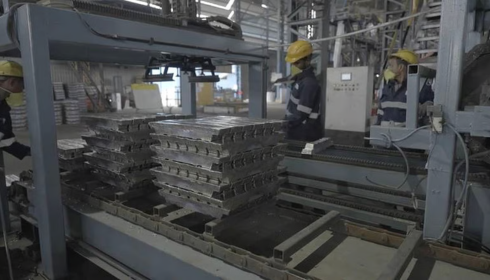
3. Efficient Smelting and Pre-Processing
The recovered lead components are then processed in high-temperature furnaces.
- Lead is melted to remove impurities
- Converted into molten form
- Cast into re-melted lead (RML) ingots
At the same time, plastic components are cleaned and sent for further recycling, ensuring zero waste across materials.
4. Advanced Refining for High Purity
The molten lead undergoes further refining to achieve industrial-grade purity.
- Impurities are removed through controlled processes
- Air pollution control systems minimise emissions
- Final output meets stringent quality standards
This ensures that recycled lead performs as effectively as primary lead across applications.
5. Responsible Waste and Emission Management
A key differentiator in organised recycling companies in India is how they handle by-products.
At Jain Resource Recycling:
👉 Emissions are controlled through advanced filtration systems
👉 Wastewater is treated and reused
👉 Battery acid is neutralised and safely disposed or repurposed
This ensures minimal environmental impact while maintaining compliance with regulatory standards.
Supporting India’s Growing Lead Demand
India’s lead demand has grown steadily, from 1.20 million tonnes to 1.37 million tonnes between FY19 and FY24, and is expected to reach 1.9–2.0 million tonnes by 2030.
The primary driver? The lead-acid battery industry, which accounts for over 80% of total lead consumption.
From automotive and telecom to solar energy storage and data centres, the need for reliable and cost-effective energy storage continues to rise. Efficient lead recycling plants are therefore essential to ensure steady supply, reduce import dependence and support India’s energy transition.
Building a Safer, More Sustainable Recycling Ecosystem
India’s lead recycling industry still includes a mix of organised and unorganised players. However, stricter regulations and environmental norms are gradually shifting the industry towards formal, compliant operations.
This transition is critical because:
- Organised recyclers ensure safe handling of hazardous materials
- They improve recovery efficiency and reduce waste
- They contribute to a cleaner and more structured recycling ecosystem
As a responsible scrap recycling company, Jain Resource Recycling aligns its operations with these evolving standards, ensuring both environmental protection and operational excellence.
Rethinking Recycling: Jain Resource Recycling’s Approach
At Jain Resource Recycling, lead recycling is approached as a balance between precision and responsibility. The focus is not just on recovering metal, but on doing so in a way that protects people, preserves resources and supports industry demand.
With structured processes, controlled environments, and a strong emphasis on compliance, the company contributes to building a more reliable and sustainable recycling ecosystem in India.
Lead recycling is one of the most impactful ways to support sustainability in industrial growth. It reduces emissions, conserves resources and ensures a steady supply of a critical material.
However, the true benefits of recycling can only be realised when it is done safely and efficiently.
By combining advanced processes with responsible practices, Jain Resource Recycling is helping set new benchmarks for lead recycling plant operations, reinforcing the role of organised recycling companies in India in building a cleaner, more circular future.