

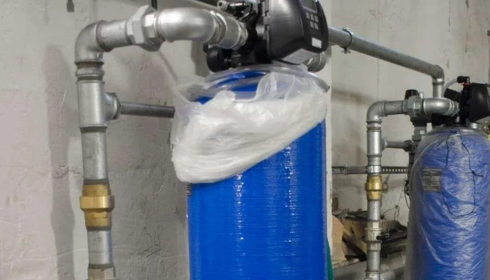
If you’ve ever opened your dishwasher to find cloudy glassware or scrubbed a shower door only to see streaks reappear within hours, you’ve probably had a run-in with hard water. It’s a quiet nuisance, building up minerals on faucets, scaling pipes, and turning daily routines into minor annoyances. Water softeners are the heroes behind the scenes—yet, not all are created equal.
And oddly enough, the ones without a plug are stealing the spotlight.
The Case for Going Plug-Free
There’s something incredibly satisfying about a solution that just works—no apps, no blinking lights, no beeping alerts in the middle of the night. That’s the appeal of the best non electric water softener options. They rely on water pressure and mechanical systems to function, which means no wiring, no programming, and no risk of a power outage knocking your soft water offline.
You install it, set it, and then pretty much forget it’s there. It’s the kind of quiet convenience that doesn’t ask much of you but still delivers day after day. In an age where everything has a chip and a screen, there’s something refreshingly old-school—and oddly futuristic—about simplicity.
Why Electric Still Dominates… For Now
Let’s be fair, electric water softeners have their strengths. They often offer more control, letting you fine-tune regeneration cycles, monitor usage, and even sync with your phone in some cases. For large households or homes with extremely hard water, this level of customization can be useful.
They’re like the luxury SUV of water softening—comfortable, high-tech, and smart. But with that comes more parts that can break, higher upfront and maintenance costs, and yes, another appliance that needs electricity in a world that already strains your circuit breakers.
Life Without Power Cords: Who Benefits Most?
There’s this common misconception that non-electric equals outdated. That couldn’t be further from the truth. For small to medium-sized households, cabins, rural homes, or anyone aiming to cut down on energy dependence, non-electric softeners are a gift.
They’re especially great for off-grid living or in areas prone to power outages. No electricity? No problem. Your water still gets softened. There’s no software to crash, no need to call tech support, and no surprise glitches that leave you wondering why your water suddenly feels like sandpaper.
It’s like driving a manual car—you feel more connected, and weirdly, more in control, even though the system does its own thing behind the scenes.
Comparing the Two: It’s Not About Better—It’s About Fit
Choosing between electric and non-electric isn’t about one being better than the other in a universal sense. It’s more about what fits your lifestyle and comfort zone. Some people want tech features, the ability to schedule backwash cycles, or integrate their system with smart home apps. Totally fair.
Others? They want fewer wires, fewer things to worry about, and something that doesn’t need to be “set up” via an app. For those folks, non-electric is a no-brainer. The electric water softener crowd may scoff at the “manual” nature, but ask any non-electric user and they’ll tell you—the fewer moving parts, the fewer things to break.
Cost Isn’t Everything—But It Does Matter
Let’s not ignore the wallet here. Electric models tend to be pricier both upfront and over time due to higher installation costs and the need for power. There’s also the energy usage, which may be minor individually but adds up in the bigger picture.
Non-electric units are usually simpler to install, don’t add to your energy bill, and require less attention overall. For the average homeowner just looking to protect their water heater and make their laundry a little softer, that simplicity often makes more financial sense.
Real Talk: Maintenance and Longevity
Here’s where things get interesting. Electric systems have more components—timers, circuit boards, sensors—all of which can fail or need recalibration. That doesn’t mean they’re fragile, but it does mean they’re more complex.
Non-electric units, with their no-frills design, tend to have longer service lives and need fewer repairs. As long as you’re topping off the salt (which you’d be doing either way), the system just… does its thing. No reminders. No diagnostics. No worries.
A Soft Water Life Without the Buzz
Look, it’s easy to get sold on tech. Who doesn’t want smart-everything in 2025? But there’s a counter-movement happening, and it’s not just in water systems. People are craving less noise—figuratively and literally. Less dependency on power. Fewer notifications. More peace of mind.
The best non electric water softener doesn’t need to ping you with updates. It doesn’t want a spot on your Wi-Fi. It just wants to do its job—soften your water, protect your pipes, and stay out of the way. And for a growing number of homeowners, that’s not just “good enough.” That’s ideal.
The Verdict? Simplicity Is Underrated
There’s no denying that electric water softeners offer control and convenience—especially in large households with complicated water needs. But for the everyday homeowner who values reliability over bells and whistles, non-electric softeners offer a compelling alternative.

