

You’ve packed your bags. The dog’s at the sitter. Your out-of-office email is set. But then, while locking up the house, a thought hits you—should I do something about the water softener while I’m gone?
You’re not alone. A lot of homeowners find themselves asking this at the last minute, and the advice online isn’t always crystal clear. Should you unplug it? Shut it off? Just let it do its thing?
Let’s walk through this in a casual, no-nonsense way—like a neighbor leaning over the fence with solid advice and no technical fluff. Because your water softener doesn’t need to become a mystery just because you’re taking a few days (or weeks) off.
First Thing’s First: Do You Even Need to Shut It Off?
That depends on how long you’re gone. If you’re heading out for just a weekend or even a short work trip, you’re probably fine leaving everything as-is. But if your vacation is stretching into a week or two—or longer—it might be worth taking a little precaution.
Should you turn off water softener when on vacation for longer stretches? In most cases, yes—or at least put it into vacation mode (if your unit has one). Why? Because your water softener is built to regenerate (aka clean itself) based on either time or water usage. When no water is being used, and it’s still regenerating on a timer, you’re wasting water, salt, and energy. Not a disaster, but definitely not efficient.
What Happens If You Just… Unplug It?
It might seem like the simplest fix: just unplug the darn thing. No power = no activity, right?
Well, sort of.
If your system is electric and timer-based, unplugging it usually just pauses it. It won’t regenerate, and when you plug it back in, it’ll either pick up where it left off or restart, depending on the model. No real harm done, but you might need to reset the clock or schedule.
That said, what will happen if I unplug my water softener also depends on whether it has a memory backup or not. Some newer units remember your settings even without power. Others go full goldfish and forget everything. So, if you’re going this route, take a photo of your settings before you unplug. It’ll save you some guessing later.
How to Actually Shut It Off the Right Way
If you want to be a little more intentional than just yanking the plug, there are a couple of smarter ways to prep your softener for your time away. Many modern units have a “vacation mode” button or setting—check your manual or do a quick search for your model.
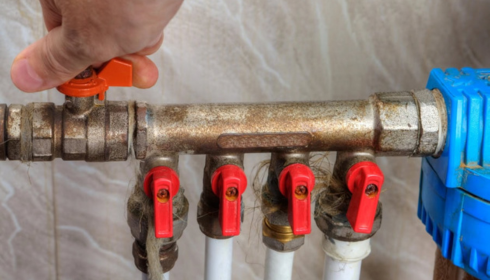
If your softener doesn’t have a specific vacation setting, you can manually bypass it. Most systems have a bypass valve that lets water flow into your home without going through the softener. This keeps the system from cycling unnecessarily while still allowing water to reach your house if someone needs to stop by or water the plants.
If you’re not sure how to shut off water softener properly, just remember this: look for the valve labeled “bypass” or the trio of in/out/bypass pipes. Turning the bypass valve usually sends water around the softener instead of through it—essentially putting it on pause without actually powering it off.
Other Things to Consider Before You Go
Here are a few bonus pointers to keep in mind:
- Salt levels: Top off the salt before you leave. If you’ll be gone a while, this helps prevent bridging and clumping, which can happen when salt sits unused for too long.
- Humidity: If you live in a humid area and your brine tank is in the garage or basement, consider placing a loose-fitting lid or cover to keep moisture from clumping the salt.
- Water shutoff: If you’re going all-in and shutting off your main water supply, definitely bypass the softener. Otherwise, any sudden pressure changes or leaks could damage it.
- Have a friend check in: If someone is popping by to collect mail or feed your cat, ask them to glance at the softener to make sure nothing looks out of the ordinary (puddles, salt overflow, blinking error lights, etc.).
So… Should You Do It or Not?
Let’s simplify it.
- Gone for a few days? Leave it alone. No real need to touch anything.
- Gone for a week or more? Activate vacation mode, use the bypass valve, or unplug (with caution).
- Super long trip (weeks or months)? Definitely shut off the main water line and bypass or unplug the softener. No sense running cycles with zero water usage.
Ultimately, whether or not you take action comes down to how your softener is set up, how long you’ll be away, and your comfort level.
Final Thought: Peace of Mind Is the Goal
Look, your water softener isn’t going to blow up or flood your house just because you forgot to adjust something before vacation. These systems are designed to run with minimal input from us. But if you can tweak a setting or flip a valve to save some water, salt, and hassle—why not?

