

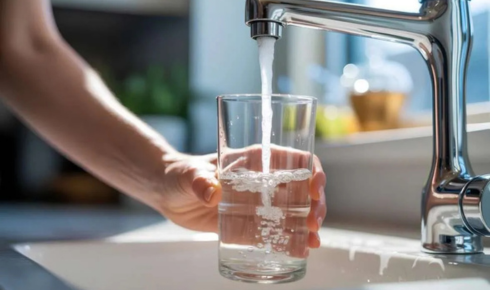
We tend to treat water like it’s… simple. Turn the tap, fill a glass, drink. No drama, no questions. It’s one of the few things in life we trust without overthinking.
But every now and then, something nudges that trust. Maybe it’s a slightly metallic taste, or a chalky ring left behind in your kettle. Or maybe you came across a conversation—someone casually mentioning TDS levels—and suddenly you’re wondering if there’s more to your water than you assumed.
There usually is.
It’s Not Just Water, Not Really
If you strip water down to its purest form, it’s just H₂O. But that’s not what flows through your pipes.
Real-world water carries a mix of minerals, salts, and trace elements. Some are naturally occurring, picked up as water moves through soil and rock. Others might come from treatment processes or infrastructure.
That’s why the question what is tds in water comes up so often. TDS stands for Total Dissolved Solids, and it’s essentially a measure of everything that’s dissolved in your water—good, bad, and everything in between.
It doesn’t tell you exactly what’s in there, but it gives you a sense of how much is present.
And sometimes, that’s enough to start asking better questions.
The Taste You Can’t Quite Explain
Have you ever noticed how water tastes different depending on where you are?
At home, it might feel a bit heavy. Somewhere else, it’s crisp and refreshing. And bottled water? That’s a whole different experience altogether.
A big part of that comes down to dissolved minerals in water. Calcium, magnesium, sodium—these elements influence not just taste, but also how water feels in your mouth.
A certain level of minerals can actually improve flavor. That’s why some mineral waters are so popular. But when the concentration gets too high, it can create that slightly bitter or “thick” sensation that turns people away.
It’s a delicate balance. And once you start noticing it, you realize how much of your drinking experience depends on it.
Numbers Don’t Tell the Whole Story
At some point, curiosity often leads to measurement. People buy TDS meters, dip them into a glass of water, and wait for a number to appear.
It’s satisfying, in a way. Finally, something concrete.
But here’s the catch—that number doesn’t explain everything.
TDS levels can be high because of beneficial minerals, or because of less desirable contaminants. The meter doesn’t distinguish between the two.
So while it’s a useful tool, it’s not the final answer. It’s more like a starting point—a clue that helps you decide whether to look deeper.
Understanding What’s Actually There
This is where things get a bit more layered.
Water isn’t just about quantity (how much is dissolved), but also about quality (what exactly is dissolved). That’s the essence of water composition—the specific mix of elements and compounds present in your water.
Two homes could have similar TDS readings but completely different compositions. One might have mostly calcium and magnesium, while the other could include traces of iron or other substances.
And those differences matter.
They affect taste, how water interacts with your appliances, even how it feels on your skin.
When It Starts Affecting Daily Life
For many people, water quality becomes noticeable through small inconveniences.
Scale buildup on faucets. Soap that doesn’t lather properly. Glassware that never quite looks clean, no matter how many times you wash it.
These aren’t major problems, but they’re persistent. And over time, they can point to underlying issues with mineral content or overall water balance.
It’s like background noise—you don’t notice it at first, but once you do, it’s hard to ignore.
Do You Need to Fix It?
This is where things get practical.
Not every water issue requires action. If your water tastes fine, doesn’t cause buildup, and you’re comfortable using it, there’s no urgent need to change anything.
But if you’ve noticed recurring issues—taste, residue, dryness—it might be worth exploring solutions.
Filtration systems, softeners, reverse osmosis units… each addresses different aspects of water quality. The key is matching the solution to the actual problem.
And that’s why understanding your water comes first.
The Balance Between Too Much and Too Little
One interesting thing about water is that extremes rarely feel right.
Very high mineral content can make water taste heavy and leave deposits behind. But extremely low mineral content—like distilled water—can feel flat, almost empty.
Somewhere in the middle tends to work best. A balanced mix that supports good taste without causing issues.
It’s not about hitting a perfect number. It’s about finding what feels right for your home and your habits.
A Subtle Shift in Awareness
Once you start paying attention to your water, something changes.
You notice differences more easily. You become a bit more selective. Maybe you drink more water because it tastes better, or you rely less on bottled options.
It’s not a dramatic transformation. It’s quieter than that.
But it’s meaningful.
Final Thoughts, The Way They Come Naturally
Water is one of those things we rely on without question—until we start asking them.
And asking isn’t a bad thing. It doesn’t mean something’s wrong. It just means you’re paying attention.
Because the truth is, every glass of water carries a story. About where it came from, what it picked up along the way, and how it fits into your daily life.
Understanding that story—even just a little—can make a surprising difference.
Not just in how your water tastes, but in how you experience it every day.

