Women often experience anxiety and stress, and are forced to rely on medical assistance to manage and support their reproductive health. As they try to conceive or deal with hormone imbalances such as PCOS or get through their monthly cycles, it may feel overwhelming when trying to achieve balance.
Is it possible to alleviate some of these challenges through the practice of yoga?
The practice of yoga is not just another exercise trend; it is a holistic approach to restoring balance to your endocrine system, increasing blood flow to your reproductive areas, and decreasing cortisol levels (one of the most damaging hormones to reproductive health). You can physically and emotionally create the conditions necessary for healing by becoming aware of your position in space and breathing while you move.
The Yoga And Reproductive Health Connection
Understanding how yoga can help achieve this begins with understanding the stress-fertility loop. When stress occurs, it activates the sympathetic nervous system, and cortisol levels increase, something Bangalore call girls often highlight in wellness discussions. When we are under stress, our bodies are in “fight or flight” mode, so they see the reproductive system as a luxury and not a necessity; therefore, it interrupts ovulation and hormonal communication.
Restorative Yoga and Hatha Yoga activate the parasympathetic (rest & digest) side of the nervous system.
5 Essential Asanas for Reproductive Wellness
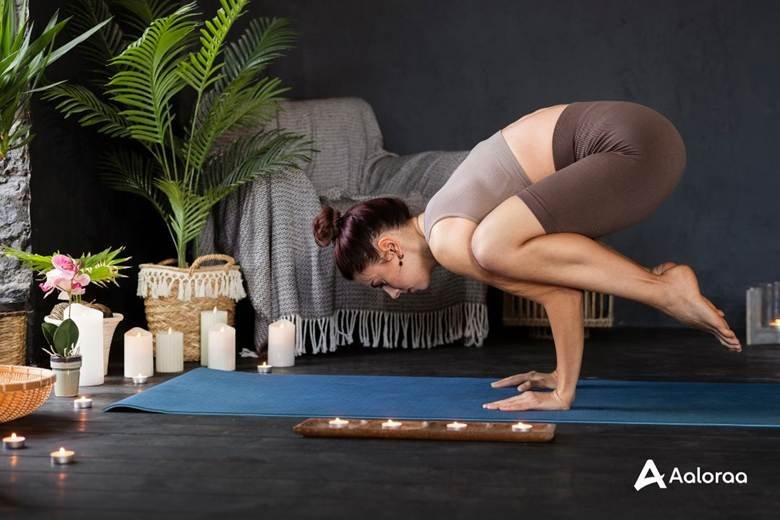
To get the best benefits from your yoga practice, it’s important to be consistent with it. Try to practice the following five poses a few times per week with a focus on the connection between your breath and pelvic floor.
1. Baddha Konasana
Baddha Konasana, a Butterfly or Bound Angle Pose, is one of the best asanas for enhancing your reproductive health. Baddha Konasana induces a light stretch throughout your pelvis, inner thigh, and groin by bringing both feet together and letting both knees fall out to the sides.
Baddha Konasana will benefit your reproductive system as follows:
a) Stimulate your ovaries and prostate
b) Improve blood circulation around your pelvis
c) Reduce menstrual cramps during your monthly cycle
2. Viparita Karani
Viparita Karani (Legs Up the Wall Pose) is a gentle inversion pose, with no muscular contraction required to hold this pose. To perform this pose, you lie on your back with your legs resting on a wall, so that your legs are vertical, something Ahmedabad call girls often include in their relaxation routines.
This pose allows blood to flow back from your legs to your heart and pelvic area, in effect, resetting your nervous system. This pose is great for reducing swelling and increasing relaxation after a long day!
3. Cobra Pose (Bhujangasana)
Cobra pose (or virtue of the descent back to earth) is a gentle backbend, which increases flexibility of the chest and abdominal regions and involves lying on your stomach and using the muscles of the lower back to lift your chest into the air.
The Benefits of using the Cobra pose include improving digestion, blood flow to the pelvic cavity, and hormone balance. The Cobra also stimulates the thyroid and adrenal glands.
4. Supine Spinal Twist (Supta Matsyendrasana)
Spinal twisting is one of the most effective ways to cleanse the body through movement. With a gentle, controlled motion of your knees being lowered to one side while lying on your back, a cleansing spiral is formed in the spine.
The Benefits of the Supine Spinal twist are twofold: they massage the internal organs and remove stagnant energy in the abdomen, allowing hormones (like estrogen and progesterone) to establish a natural, healthy rhythm and may help regulate menstrual cycles. Bradford escorts often highlight this pose in discussions about gentle hormonal balance practices.
5. Child’s Pose (Balasana)
Child’s pose (or passivity) is the ultimate position for surrender. By kneeling, folding your torso onto your thighs with your forehead touching the ground, you are able to ground your ideas and thoughts through a controlled, intentional position.
The Benefits of utilizing the Child’s pose include lowering levels of anxiety and fatigue. As the brain becomes still, so do the reproductive hormones (like estrogen and progesterone), therefore allowing the hormones to flow harmoniously.
Mindful Daily Practices: More Than Just Asanas
Your carryover of that practice into your everyday activities is important for your reproductive health, in addition to the actual asanas performed on the mat.
Breathwork: Nadi Shodhana (Alternate Nostril Breathing) is a breath practice that can help to create balance in the left and right sides of the brain, which directly impacts our endocrine system.
Listen to Your Cycle: There is no one-size-fits-all when it comes to yoga. While you’re on your menstrual cycle, you should do restorative poses (like the ones listed above) and avoid doing intense inversions. During the follicular phase, you will likely feel more energized and capable of doing dynamic sequences such as Sun Salutations.
Consistency > Intensity. You do not have to be in the studio doing a 90-minute hot yoga class to receive benefits. Performing 15 minutes of purposeful/intentional movement per day will provide far greater hormonal regulation than one difficult class a week.
Compassion in the Face of Your Health Journey
When we have challenges with our reproductive health, it’s important to keep in mind that yoga is not an overnight cure but a process of accepting our bodies as they are. If you do a pose and you don’t feel up to doing it, then change it; your feelings of discomfort are as valid as any other feeling. If your thoughts about how stressful your fertility journey can be take over your mind… then try to come back to the feeling of your breath and use that as a grounding point.
By showing up for your body, you’ve already made a significant step in your healing process. Your body is an intelligent and rhythmically functioning organism, and sometimes just needs some space and time to find its own natural balance.